Advice
Autumn Lawn Care in Trowbridge: What to Do and When
By Matt, Gordon's Home & Garden ·
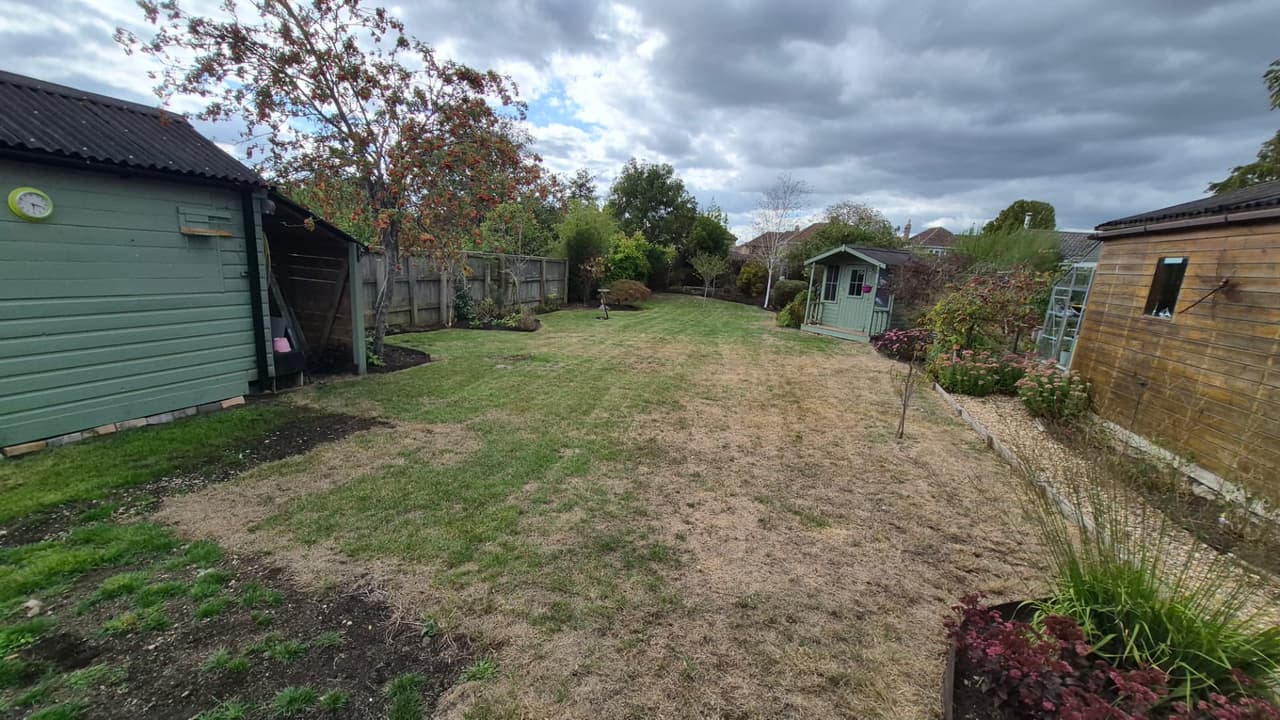
A lawn that looks thin, mossy or patchy by the end of summer is not a lost cause. Autumn is the best time of year to put it right, because the soil is still warm, rain is more reliable and the grass has months to recover before it is asked to do much work again. The RHS recommends doing the main lawn renovation jobs in September or October.
This guide covers the jobs that make the biggest difference, with a few notes for the heavier clay soils found across much of Trowbridge and the surrounding Avon vale.
Start by looking at what is actually wrong
Before buying anything or hiring a scarifier, walk the lawn and work out the problem. Moss usually points to shade, poor drainage or compacted ground. Bare patches along a path or by the back door are wear. A spongy feel underfoot means a layer of thatch, the mat of dead grass and moss that builds up between the blades and the soil. Standing water after rain means compaction or drainage.
Each of those has a different fix, and doing the wrong one wastes the autumn.
Scarifying: removing the thatch
Scarifying means raking out the thatch so air, water and feed can reach the roots. The RHS suggests a simple test: if you cannot see the soil between the blades of grass, it probably needs doing. On a small lawn a spring-tined rake works, raked hard in two directions. On a larger lawn a powered scarifier saves a lot of effort.
Expect it to look worse before it looks better. A properly scarified lawn can look thin and scratched for a few weeks. That is normal, and it is why it should be done early in autumn, while the grass is still growing.
Aerating: the job clay lawns need most
Clay soils pack down easily, especially where people walk, and once they are compacted water sits on the surface and roots stay shallow. Aerating opens the soil back up.
The RHS advice is that a garden fork pushed in every few inches works for most lawns every two to three years. On clay or waterlogged ground, a hollow-tined aerator is better because it pulls out plugs of soil and leaves wider holes, and it is worth doing every three to four years. Do it when the soil is moist but not saturated.
Top dressing
After hollow tining, the holes can be filled with a top dressing brushed into the surface. The RHS suggests a mix of sandy loam, sharp sand and well-rotted compost or soil improver at about 2 to 3kg per square metre. On clay this gradually improves the top layer of soil and helps water drain away from the roots.
Feeding: only if it needs it
If the lawn needs feeding, use a product made for autumn. Autumn feeds are designed to encourage root growth through the winter rather than soft, leafy growth. Apply the minimum amount, ideally just before rain is forecast. Do not use a high-nitrogen spring or summer feed in autumn.
Overseeding bare patches
Once the thatch is out and the soil is opened up, autumn is a good time to overseed thin areas. Keep the seed moist while it germinates. If the lawn is beyond patching, laying new turf is an option, and the RHS notes that mid-autumn is the best time to lay turf. There is more on that choice in our guide to turf or artificial grass.
What to leave until spring
Avoid walking on the lawn when it is frozen or waterlogged, as that does more damage than any amount of scarifying can fix. Do not cut it too short going into winter. Keep leaves raked off, because a layer of wet leaves left for weeks will yellow the grass underneath.
When it is more than a lawn problem
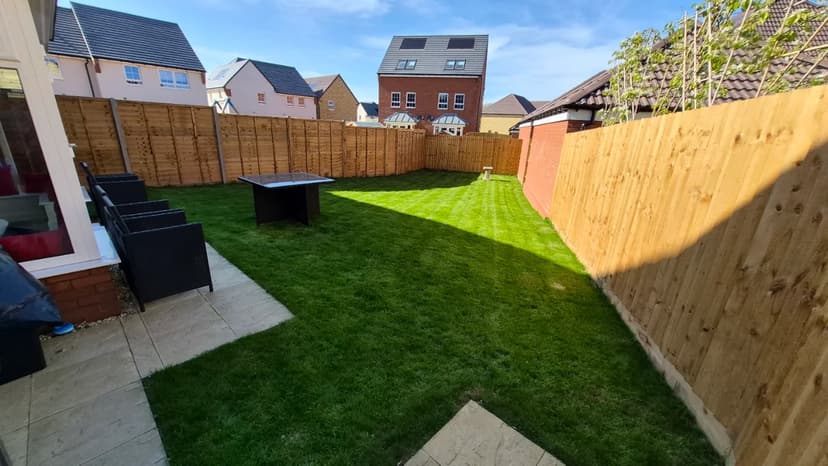
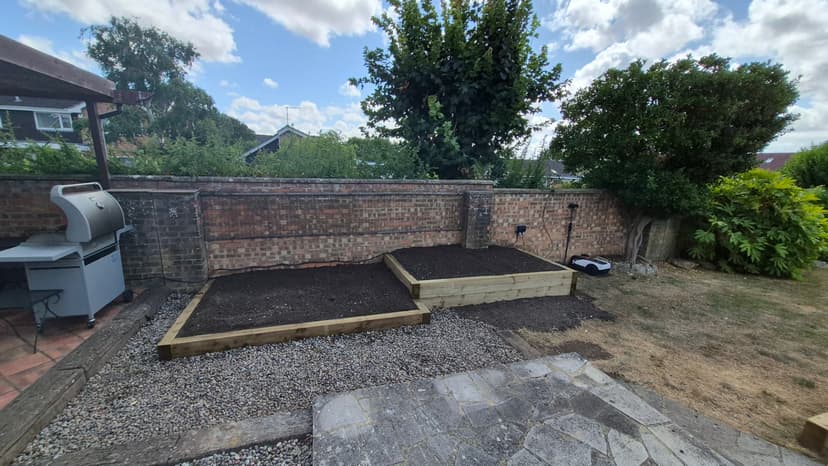
Sometimes the lawn is the symptom rather than the problem. A lawn that floods every winter may need the levels looking at, a raised bed or a path where people actually walk. In new-build gardens, poor lawns are often down to compacted ground and builders' rubble under a thin layer of topsoil.
If you would rather hand the work over, regular garden maintenance covers mowing, edging and seasonal lawn care, and a garden makeover can deal with levels, drainage and a new lawn properly. Matt works across Trowbridge and Melksham and the surrounding villages.
Quick autumn lawn checklist
- Walk the lawn and work out whether the problem is thatch, moss, wear or compaction
- Scarify in early autumn if you cannot see the soil between the blades
- Hollow tine clay lawns every three to four years
- Brush in a sandy top dressing after aerating
- Feed only if needed, with an autumn feed
- Keep leaves off and stay off frozen or waterlogged grass
For a free quote on lawn care or garden maintenance, get in touch or call Matt on 07356 272150.