Advice
Raised Sleeper Beds on Clay Soil: A Practical Guide
By Matt, Gordon's Home & Garden ·
If your borders are heavy, sticky in winter and baked hard in summer, you are probably gardening on clay. Much of the lower ground around Trowbridge, Melksham and Westbury is clay, and while it is usually fertile, it drains slowly and warms up late in spring. Raised beds are one of the most practical ways to work with it rather than against it.
Why raised beds help on clay
A raised bed lifts the growing area above the wet ground and lets you fill it with a better, free-draining mix. The RHS describes raised beds as especially useful where garden soil is poor, or heavy and prone to waterlogging. Plants get better drainage and warmer soil in spring, and you avoid digging heavy clay every year.
They also make gardening easier on the back and knees, keep a garden looking tidy, and turn awkward slopes into usable level areas.
Height and width
The RHS recommends a depth of at least 45cm for most plants, especially fruit bushes, shrubs and small trees. Around 30cm is enough for salad leaves, bulbs and strawberries. Two standard sleepers stacked give a comfortable working height for most people.
Keep beds narrow enough to reach the middle without stepping on the soil. The RHS suggests less than 1.5 metres wide if you can reach from both sides. Length is up to you and the space.
Choosing the timber
New pressure-treated softwood sleepers are the most common choice. They are economical and, if properly treated, last for years. Oak sleepers cost more and last longer, and weather to a silver grey.
Do not use old railway sleepers treated with creosote. The RHS notes that it is no longer permitted to use creosote-impregnated sleepers in the garden. Reclaimed sleepers of unknown origin are best avoided in vegetable beds.
Timber in contact with the ground should be treated to Use Class 4. Any cut ends should be re-treated with an end grain preservative.
Building the bed
On clay, a few details make the difference:
- Level the ground first so the bed sits square and true
- Fix sleepers together firmly at the corners and stagger joints on taller beds
- Drill drainage holes in the lower sleepers so water is not trapped
- Break up the clay at the base with a fork so roots can eventually go down into it
- For taller beds, line the inside face to protect the timber from wet soil
Filling it
The RHS suggests a general mix of roughly seven parts topsoil, three parts organic matter and two parts sharp sand for most beds, with extra sand for plants that need sharp drainage. For beds deeper than 50cm, the base can be filled with subsoil or rubble to save on topsoil, with the good mix on top.
Fill to about 5cm below the rim, firm the soil and let it settle for a couple of weeks before planting. Topping up with compost each year keeps the level up.
Paths between beds
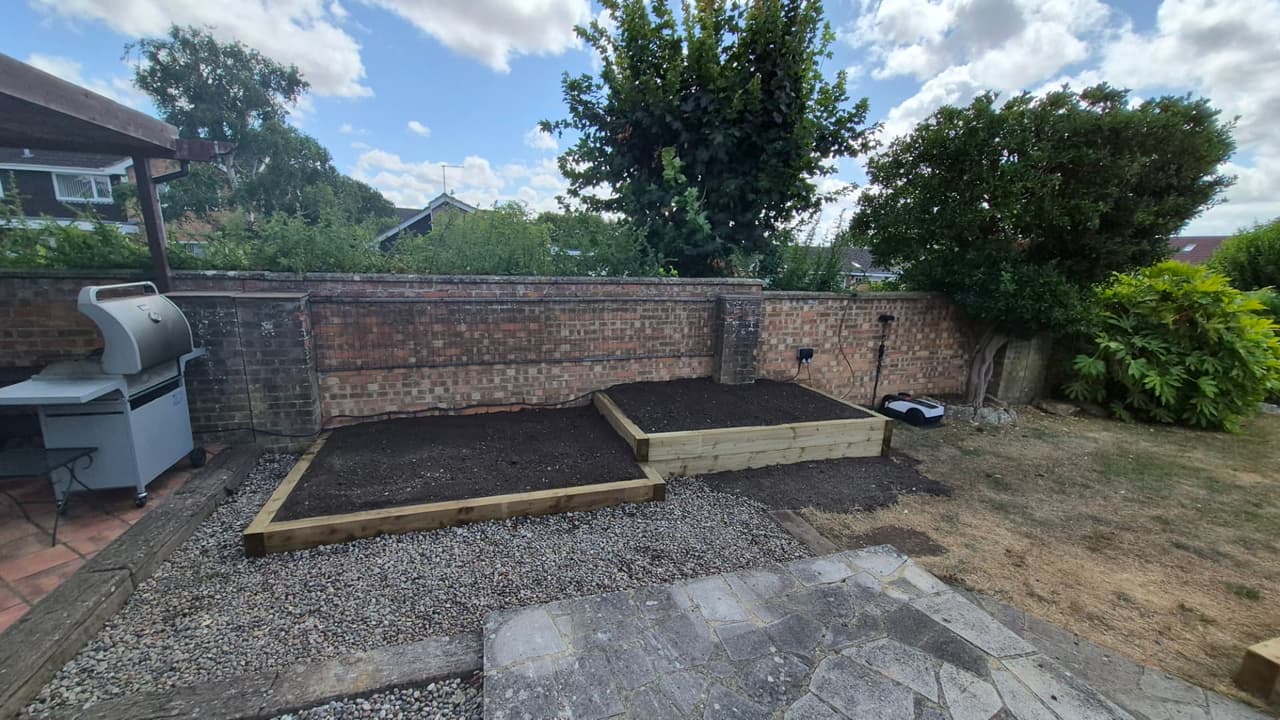
Several raised beds work best with firm, dry paths between them. Gravel over a weed membrane is cheap and drains freely, bark is softer underfoot, and paving gives a clean edge for a wheelbarrow. On clay, avoid leaving grass paths between beds in areas that get heavy use, as they soon turn to mud in winter. Leave paths wide enough for a barrow, usually around 60cm or more.
Getting rid of the old bed first
Raised beds often replace something else: a tired rockery, an overgrown border or a corner of rubble. That needs clearing properly, with the waste taken away by a registered carrier. The guide to checking a waste carrier explains why that matters.
Raised beds as part of a bigger plan
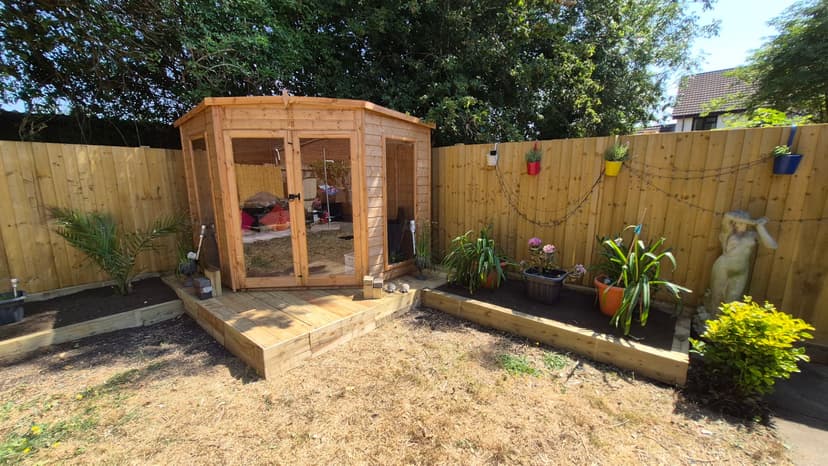
Sleeper beds work well with gravel or paved paths between them, and alongside new fencing. They are a regular part of garden makeovers, often after a garden clearance, and are easy to keep tidy with regular maintenance. If a patio is going in at the same time, the guide to building a patio on clay soil is worth a read.
Matt builds raised sleeper beds across Trowbridge, Westbury and the surrounding area. The gallery includes old rockeries rebuilt as raised beds, sleeper borders along new fence lines and a sleeper bed beside a pool. For a free quote, get in touch or call 07356 272150.