Advice
Storm-Damaged Fence? What to Do and Repair Options
By Matt, Gordon's Home & Garden ·
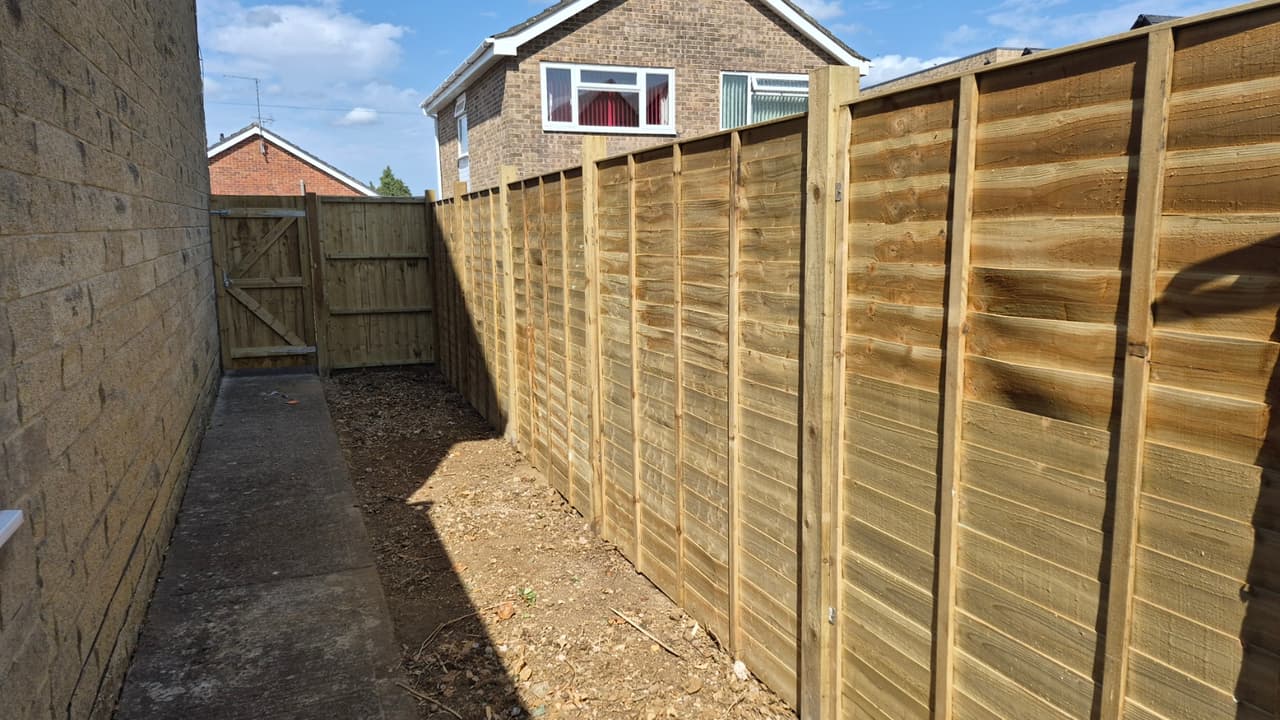
Autumn and winter storms are hard on garden fences. A run of panels that has been quietly weakening for years can go over in one night, usually taking a post or two with it. If it has happened to you, here is what to do first, how to decide between repair and replacement, and how to build the new fence so it stands up better next time.
First, make it safe
A fallen or leaning fence can be dangerous, particularly if it is leaning over a path, a driveway or a neighbour's garden, or if children and pets use the area. Keep people away from it. If a section is hanging, it is safer to lay it flat than to leave it swinging. Do not try to hold a leaning fence up against strong wind.
Take photos before you move anything. They are useful if you need to talk to a neighbour about a shared boundary or make an insurance claim. Whether fence damage is covered depends entirely on your own policy, so check the wording rather than assuming either way.
Work out what actually failed
Look at the damage before deciding what to do.
- Panels blown out but posts standing: the simplest repair. New panels can often go back in the same posts.
- Posts snapped at ground level: the most common failure on timber posts. Rot starts where the post meets the ground, and once it is weakened the wind does the rest.
- Posts leaning with concrete still attached: the post footing was too shallow or the ground has softened. Clay ground that is waterlogged in winter gives posts much less grip.
- Concrete posts cracked: less common, but it happens, usually from impact or a very heavy fence.
Repair or replace?
If one or two panels have gone and the posts are sound, replacing the panels is usually sensible. If several timber posts have snapped at the base, the others are probably not far behind, and replacing the whole run is often better value than repairing it piece by piece.
Building it back stronger
A few things make a real difference in exposed gardens.
Concrete posts and gravel boards. Concrete posts do not rot, and concrete gravel boards keep the bottom of the fence off the wet ground. Panels slot into the posts, so a blown panel can be replaced without disturbing anything else.
Properly treated timber. If you prefer timber posts, they should be pressure treated to Use Class 4, the level intended for timber in contact with the ground. Cut ends should be re-treated, and the cut end should never go into the ground.
Close-board instead of panels. Close-board fencing, built on site from rails and overlapping boards, is stronger than lightweight lap panels. The fencing page explains the difference.
Depth and footing. Posts need to be set deep enough for the height of the fence and the conditions. On soft clay ground that holds water in winter, a firm footing matters more than usual.
Shared boundaries and neighbours
If the fence is on a shared boundary, talk to your neighbour before replacing it. Your deeds or title plan may show who is responsible for which boundary, sometimes marked with a T on the inside of the line. If you are thinking of going higher than before, the guide to fence planning permission in Wiltshire covers the height limits.
Clearing up
Broken panels, snapped posts and old concrete footings all need to go somewhere. If you are paying someone to take them away, make sure they are a registered waste carrier. The guide to checking a waste carrier explains why that matters for you.
Fence repairs with Gordon's
Replacement panels after a storm are a normal job, not too small to ask about, and full replacements are quoted with the old fence taken out and removed. See the fencing and gates page for the options, and the clearances page if there is more to clear. Matt covers Westbury, Trowbridge and the surrounding area, including the more exposed villages towards Salisbury Plain.
For a free quote, get in touch or call 07356 272150. Photos of the damage help.