Advice
Paving a Front Garden for a Driveway: The Rules Explained
By Matt, Gordon's Home & Garden ·
Turning a front garden into a parking space is one of the most common outdoor projects, especially on streets where on-road parking is tight. Before the diggers arrive, there are a few rules to understand. Some are about planning, some are about the pavement, and all of them are about where the rainwater goes.
This guide covers houses in England. Flats and maisonettes have different rules.
The five square metre rule
If you are paving more than five square metres of a front garden with a traditional, impermeable surface, such as standard concrete or tarmac or slabs laid on mortar, and the rainwater runs off onto the road, you will need planning permission.
You do not need permission if:
- The new surface is permeable, letting water drain through it, or
- Rainwater from an impermeable surface is directed to a lawn or border where it can drain naturally
The rule applies to new and replacement surfaces.
What counts as permeable
Permeable options include gravel, permeable block paving laid on a free-draining base, porous asphalt and some grid systems that hold gravel or grass. The base matters as much as the surface. Permeable blocks laid on a sealed concrete base are not permeable in practice.
On clay soil, which is common around Melksham and Trowbridge, water soaks away slowly. A permeable driveway on clay may need a deeper free-draining base or an outlet so water is stored and released rather than sitting on the surface.
The dropped kerb
If you need to drive over the pavement to get onto your property, you need a dropped kerb. Driving over a full-height kerb is not allowed and damages the footway. A dropped kerb needs an application to the local highway authority, which for most of Wiltshire is Wiltshire Council, and it may also need planning permission, particularly on classified roads. Check this before you pave, because a driveway you cannot legally drive onto is not much use.
Boundaries and front walls
Taking out a front wall or fence to make room for a car may need permission in a conservation area, and anything at a listed building needs checking. New front fences or gates next to a road can usually be up to 1 metre high without planning permission. The guide to fence planning permission in Wiltshire has more on boundaries. Newer estates may also have covenants in the deeds about front gardens.
Building it properly
A driveway carries much more weight than a patio. Marshalls' guidance suggests 100 to 150mm of compacted sub-base for driveways, compared with 75 to 100mm for patios and paths, with a firmer base on soft clay. Edging needs to be strong enough to stop blocks spreading under car wheels. Levels should carry water away from the house and not towards a neighbour's property.
The guide to building a patio on clay soil explains sub-base, compaction and falls in more detail.
Common mistakes
The most frequent mistakes are paving before checking the dropped kerb, laying permeable blocks on a sealed base, and getting the falls wrong so water runs towards the house or the garage. Another is forgetting about manhole and inspection chamber covers, which need to stay accessible and be raised or lowered to the new level. Finally, check where existing services such as water, gas and electricity cables run before digging out, and make sure any outside tap or light cable is moved before the new surface goes down.
Keep some green
Even with parking, a front garden does not have to be all hard surface. A planted strip, a border to take the run-off, or gravel with planting softens the look, helps drainage and may avoid the need for planning permission altogether.
Driveways and front gardens with Gordon's
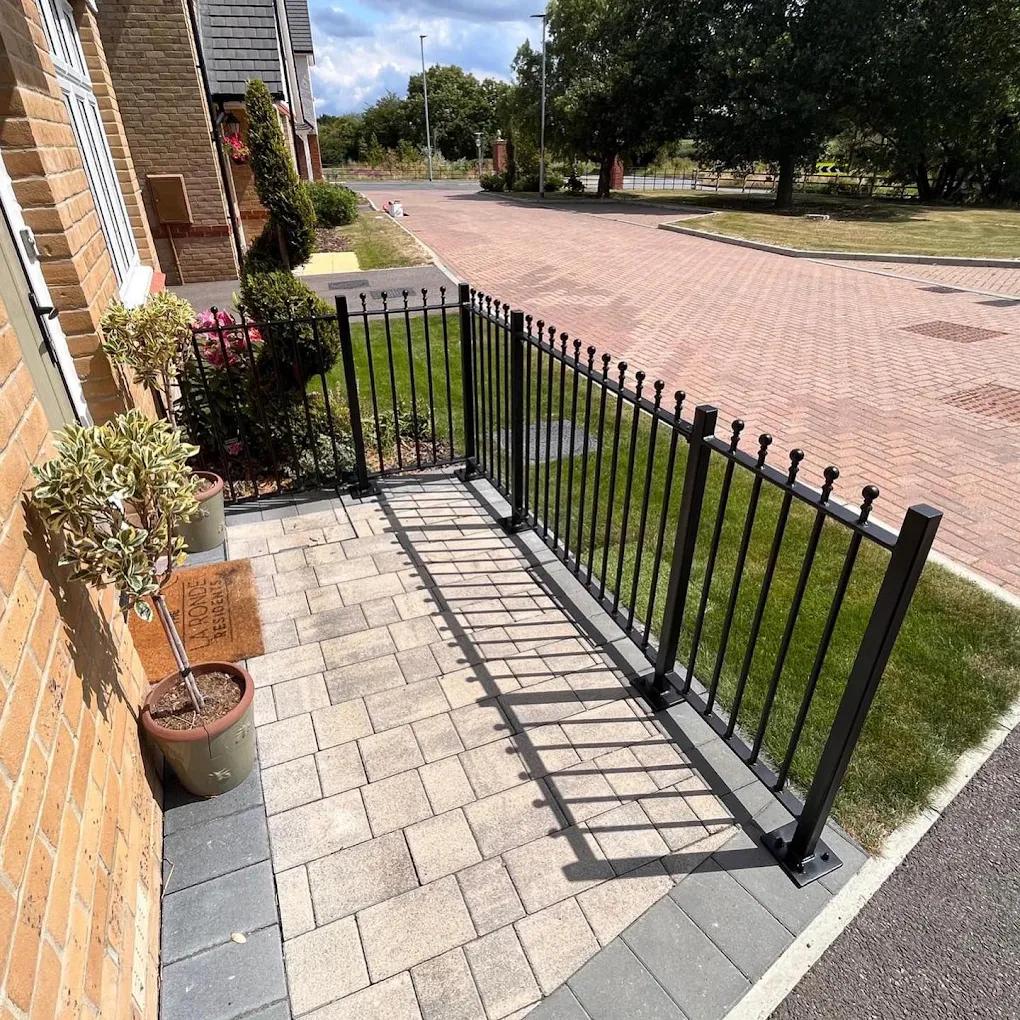
Matt lays block paving, gravel and paths with edging and drainage. The patios, paths and driveways page covers materials and how a job runs, and railings and front boundaries can be done at the same time, as in the block paved front garden with black railings shown here. Front gardens that are part of a wider tidy-up can include planting and landscaping.
Gordon's works across Melksham, Westbury and the surrounding area. For a free quote, get in touch or call 07356 272150.