Advice
Building a Patio on Clay Soil in Trowbridge
By Matt, Gordon's Home & Garden ·
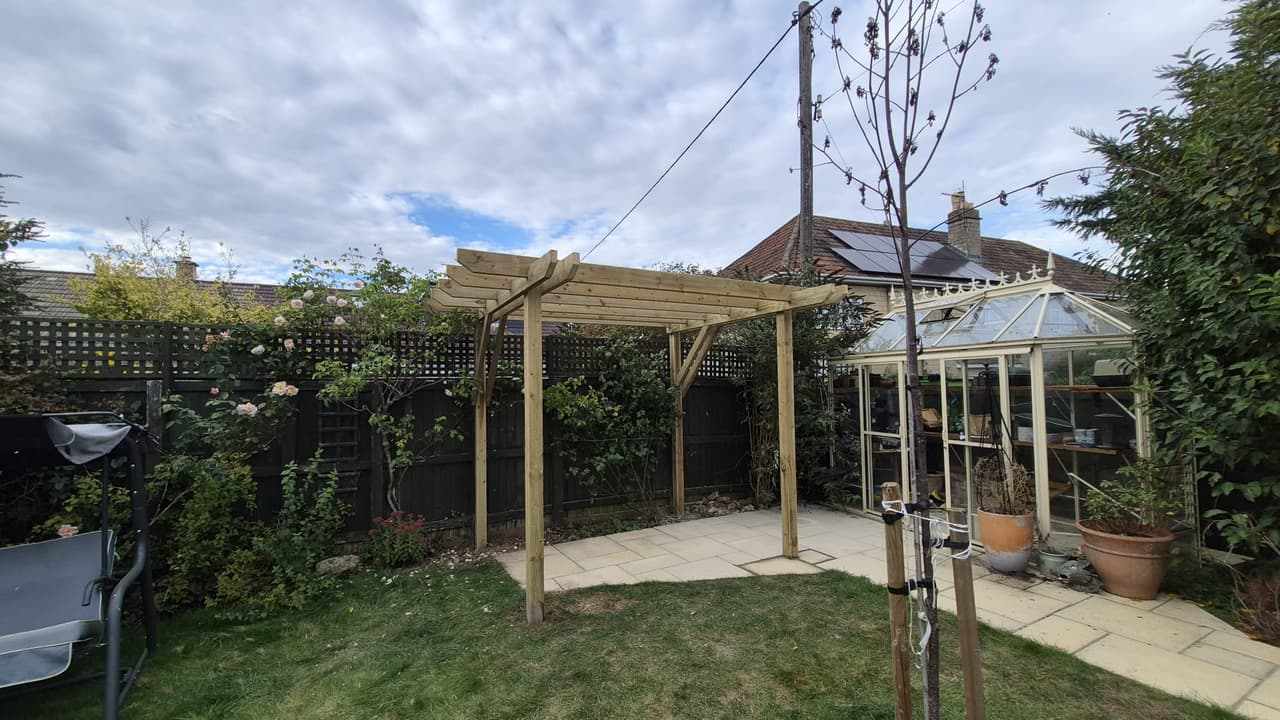
When a patio rocks, sinks in one corner or holds a puddle every time it rains, the slabs are rarely the problem. The cause is almost always underneath: a base that was too thin, ground that was not compacted, or no proper fall to carry water away. On clay soil, which covers a lot of the lower ground around Trowbridge and the River Biss valley, those mistakes show up faster.
This guide explains what is going on under a well-built patio and what to ask before you book one.
Why clay is harder work
Clay holds water. Through a wet winter it stays soft and heavy, and in a dry summer it can shrink and crack. Ground that moves with the seasons will move a patio that is not built on a firm, well-drained base. Clay also drains slowly, so water that runs off a patio towards a lawn may sit there rather than soak away.
None of that means you cannot have a patio on clay. It means the preparation matters more.
Digging out
The first job is excavation. Turf, topsoil and any soft or organic material need to come out, because they will rot and settle. How deep you dig depends on the sub-base, the bedding layer and the thickness of the slabs, and on keeping the finished surface below the damp proof course of the house, usually by at least 150mm.
The sub-base
The sub-base is the layer of compacted crushed stone that carries the patio. MOT Type 1 is the most common material, a crushed stone with particles from 40mm down to dust that compacts into a firm platform. Marshalls' guidance suggests a sub-base of 75 to 100mm for patios and garden paths and 100 to 150mm for driveways, and notes that soft, clay-heavy ground may need a firmer sub-base. A geotextile membrane under the sub-base can stop it being pushed down into soft clay.
The sub-base should be laid in layers and compacted with a plate compactor. Throwing it in and compacting once at the end does not do the same job.
Falls and drainage
A patio should never be dead level. It needs a gentle fall so rainwater runs off, away from the house, towards somewhere it can go. On clay, think about where that water ends up. If it runs onto a lawn that already waterlogs, the lawn will get worse. Options include a gravel strip or soakaway at the low edge, a channel drain, or directing water to a border.
Bedding and jointing
Slabs are usually laid on a full bed of mortar rather than on dots or dabs, which leave voids under the slab that can crack or rock. Porcelain needs a priming slurry on the back of each tile to bond properly. Joints are then filled with mortar or a jointing compound so weeds and water cannot get in.
Choosing the surface
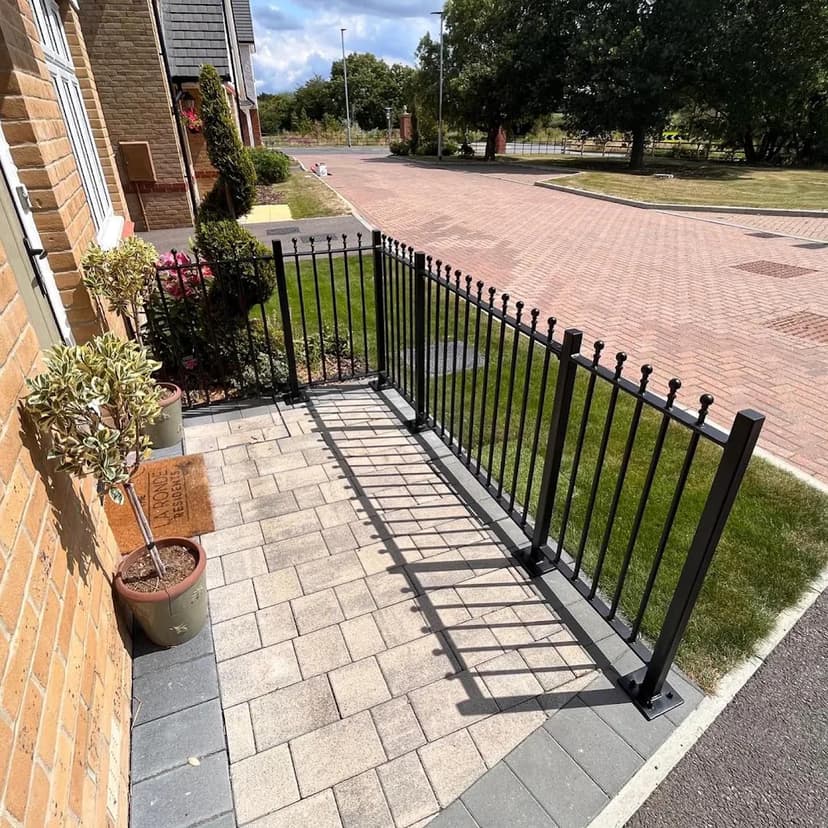
Porcelain is hard-wearing and easy to clean. Natural sandstone looks softer and suits older properties. Concrete slabs are cheaper. Block paving suits driveways and paths that take more weight. Gravel with sleeper or steel edging is the most forgiving option on difficult ground because it drains freely. If the patio is in a front garden, there are also planning rules about surfaces that do not let water through.
Questions to ask before booking
- How deep will the sub-base be, and what material is it
- Will it be compacted in layers
- Which way will the water run, and where will it go
- Is the finished level below the damp proof course
- What happens to the excavated soil
A good installer should answer those without hesitation.
Patios as part of a bigger job
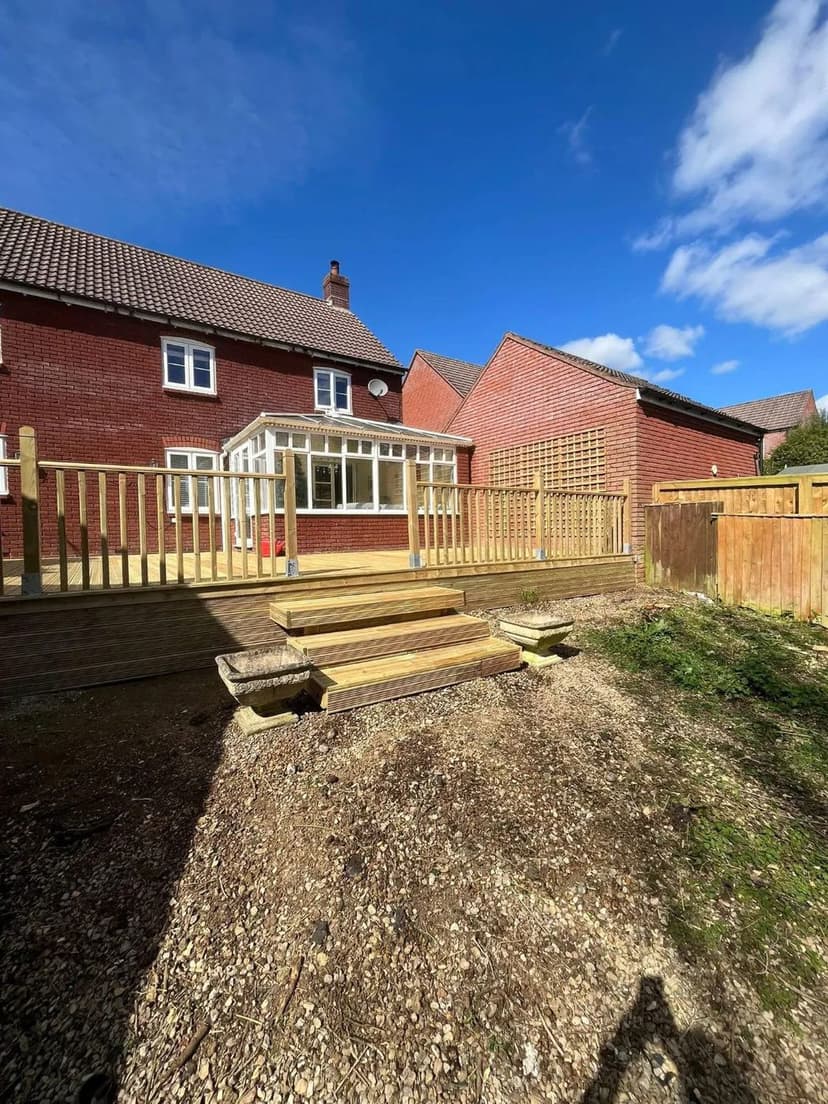
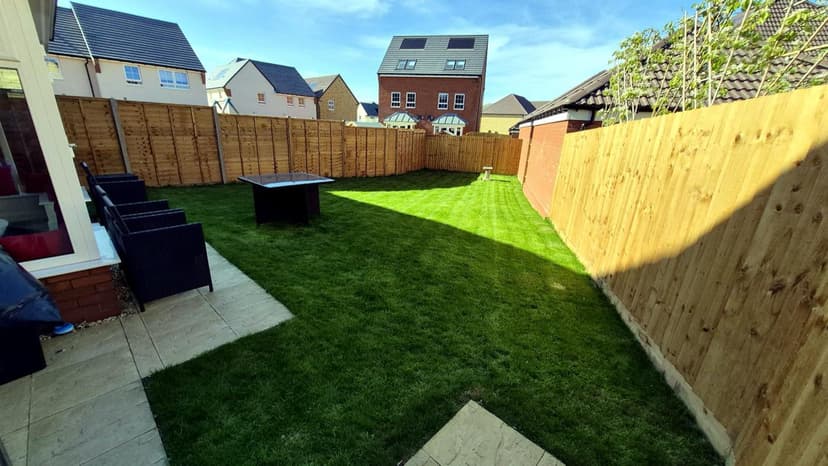
Patios rarely happen on their own. They often come with new fencing, decking or a pergola, or a full garden makeover with new turf and beds. The patios, paths and driveways page has more on materials and the way Matt runs a job. If you are thinking about fencing at the same time, the guide to fence planning permission is worth reading first.
Matt lays patios and paths across Trowbridge, Melksham and the surrounding area. For a free quote, get in touch or call 07356 272150.