Advice
Timber or Composite Decking? An Honest Comparison
By Matt, Gordon's Home & Garden ·
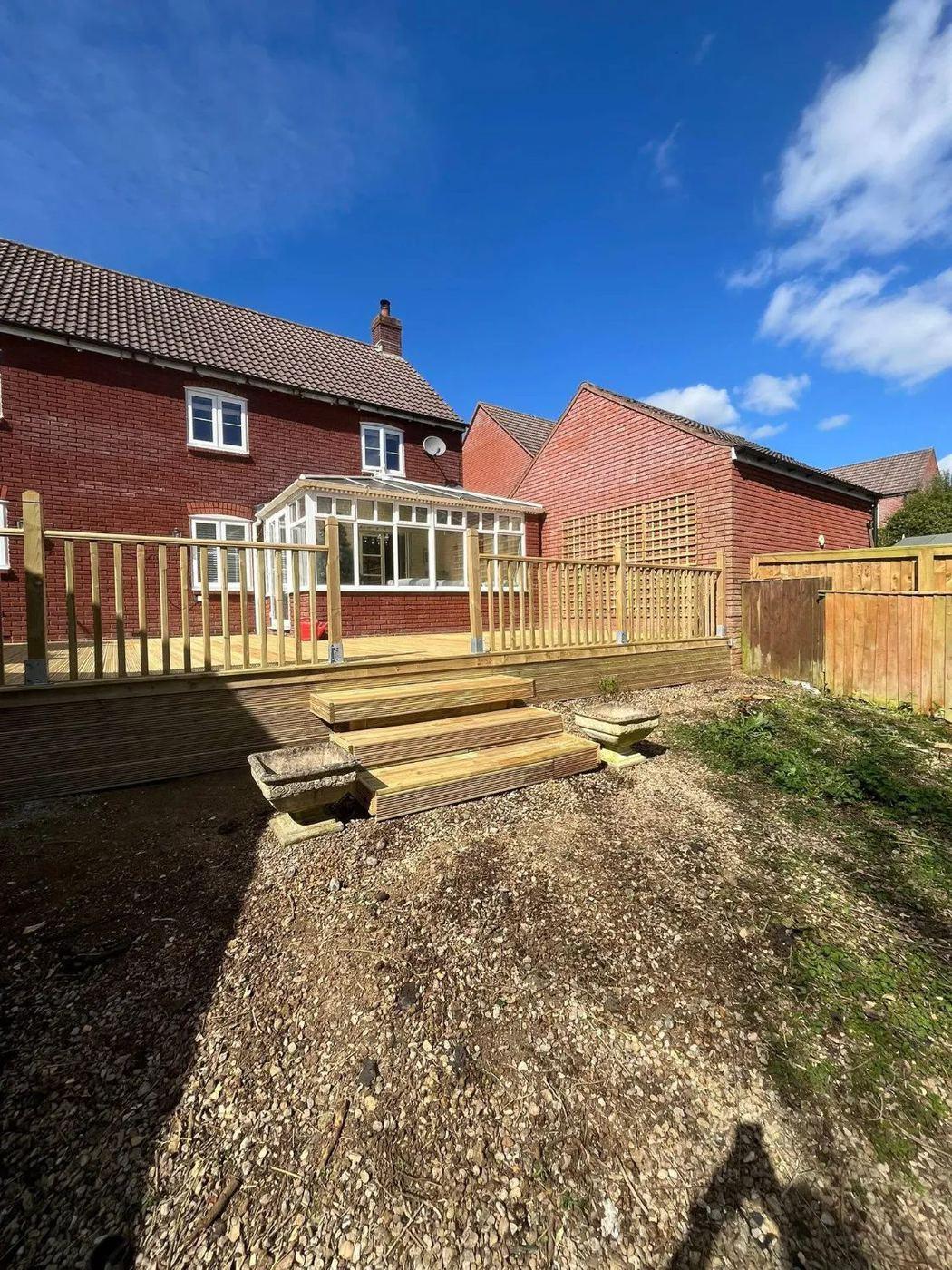
Decking is one of the quickest ways to make a garden usable, especially on a slope or a patch of ground that never quite works as lawn. The first big choice is the boards: traditional timber or composite. This guide sets out the honest differences, and the part that matters most whichever you pick.
Timber decking
Most timber decking in the UK is pressure-treated softwood. Hardwood decking exists but is much less common in gardens.
Pros: lower upfront cost, a natural look and feel, easy to cut and repair, and it can be stained or oiled to change the colour.
Cons: it needs regular cleaning and treating to stay looking good. Left alone it greys, can grow algae and become slippery in shade, and boards can split or cup over time.
Composite decking
Composite boards are made from a mix of wood fibre and plastic, usually with a protective outer shell on better-quality boards.
Pros: much less maintenance, no staining or oiling, consistent colour, and good resistance to rot and splinters.
Cons: higher upfront cost, it can get hot underfoot in strong sun, and it is harder to repair invisibly. Quality varies a lot between brands, and cheaper boards can fade or mark.
The frame matters more than the boards
Whatever goes on top, a deck lasts only as long as its frame. The joists, bearers and posts should be timber pressure treated to Use Class 4, the treatment level for wood in contact with or close to the ground. Asking for "treated" timber is not enough; the use class should be specified.
Composite boards do not make a timber frame last longer. Many composite deck failures are really frame failures.
On clay soils, which are common around Trowbridge and Melksham, the ground under a deck can stay wet for long periods. Good practice is to keep the frame off the soil, allow air to move underneath, lay a weed membrane and make sure water drains away rather than pooling.
Raised decks, steps and balustrades
Decks on sloping gardens often need steps, handrails and balustrades. These should be built solidly and fixed properly, particularly on higher decks where a fall would be serious. A deck on a slope can also be a better answer than a large retaining wall.
Planning rules for decking
Under the national permitted development rules for houses in England, decking does not usually need planning permission as long as:
- It is no more than 30cm above the ground
- No part of it is in front of the main front wall of the house
- Together with extensions and outbuildings, it covers no more than half the garden
Higher decks, decks at flats and maisonettes, and decks at listed buildings need checking with Wiltshire Council first.
Which should you choose?
If you are happy to spend an afternoon or two a year cleaning and treating, and want to keep the upfront cost down, timber is a good choice. If you want something that mostly looks after itself and are prepared to pay more at the start, composite is worth it. In heavily shaded areas where timber goes green, composite often has the edge.
Looking after a deck
Whatever the boards, a deck lasts longer with a little care. Sweep off leaves and debris so they do not sit wet in the gaps between boards. Clear the area under the deck of anything that blocks airflow. Check fixings and handrails once a year, especially on raised decks and steps. Timber decks benefit from a clean and a fresh coat of treatment every year or two, and any board that has split or gone soft should be replaced before it becomes a trip hazard.
Decks as part of the garden
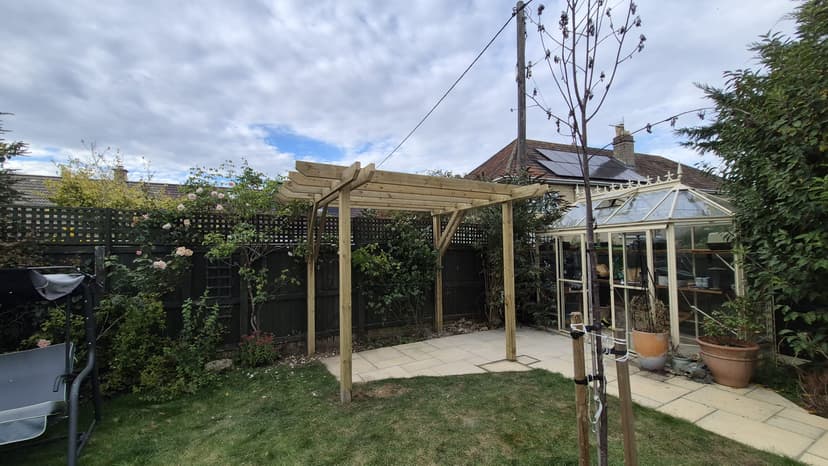
Decks often sit beside a patio, with new fencing or screening and planting around them. The decking and garden structures page shows the range, from raised decks with balustrades to summer house bases and pergolas, and they are often part of a full garden makeover. If you are thinking about paving instead, the guide to patios on clay soil covers that side.
Matt builds decks across Melksham, Trowbridge and the surrounding area, and will talk through timber and composite honestly. For a free quote, get in touch or call 07356 272150.